Slow drain, gurgle or standing water: what each sign points to
Where the water misbehaves tells you more than how bad it looks. One slow bathroom sink usually means hair and soap scum in the trap or the first few feet of branch line. A tub that gurgles when the washer empties points farther down, where several fixtures share one pipe.
Water rising in the lowest tub or a floor drain while a toilet flushes is the classic sign of a blocked main drain. That one needs a plumber the same day.
| What you see | Where the clog probably is | What we do first |
|---|---|---|
| One sink drains slowly, the rest are fine | Trap or branch line of that fixture | Pull the trap, then run a cable through the arm and the wall pipe |
| Kitchen sink backs up into the laundry sink | Shared kitchen and laundry drain, often grease below the trap | Open the line at the nearest cleanout and cable toward the main |
| Toilet gurgles when the shower runs | Partial blockage in a branch or the main drain | Cable the main from the cleanout and check the vent |
| Tub and floor drain fill when the washer empties | Main drain, past the point where branches join | Clear the main, then camera the line if it returns |
| Sour smell with a slow drain | Dried trap, film on the pipe wall, or a partial blockage | Flush and inspect the trap, then clear the line |
If a drain is backing up into your house right now
While you wait for the plumber
These four moves keep a bad clog from turning into a wet floor.
Stop sending water down
Every flush, laundry load or dishwasher cycle adds to the pool. Hold them all until the line is open.
Protect the floor
Lay towels at the base of the fixture that is overflowing and move rugs and cardboard boxes out of reach.
Skip the chemical cleaner
Caustic openers sit in a blocked pipe and can splash on whoever works on it next. Tell us if you already used one.
Call and describe the pattern
Dial (919) 944-7281 and list the affected fixtures, because that decides the first tool we bring. Same-day appointments are offered when available, and dispatch also answers after hours.
How we clear a clog, working outward from the trap
The order matters, because the closest access point is the least disruptive one.
- 01
Find where it starts
We run water at each fixture to see which are slow, which are dry and which are backing up. That narrows the clog to a stretch of pipe before any tool goes in.
- 02
Open the trap
On sinks we pull the P-trap and clear it by hand first. Trap clogs are common, and the trap also shows what the clog is made of.
- 03
Cable the line
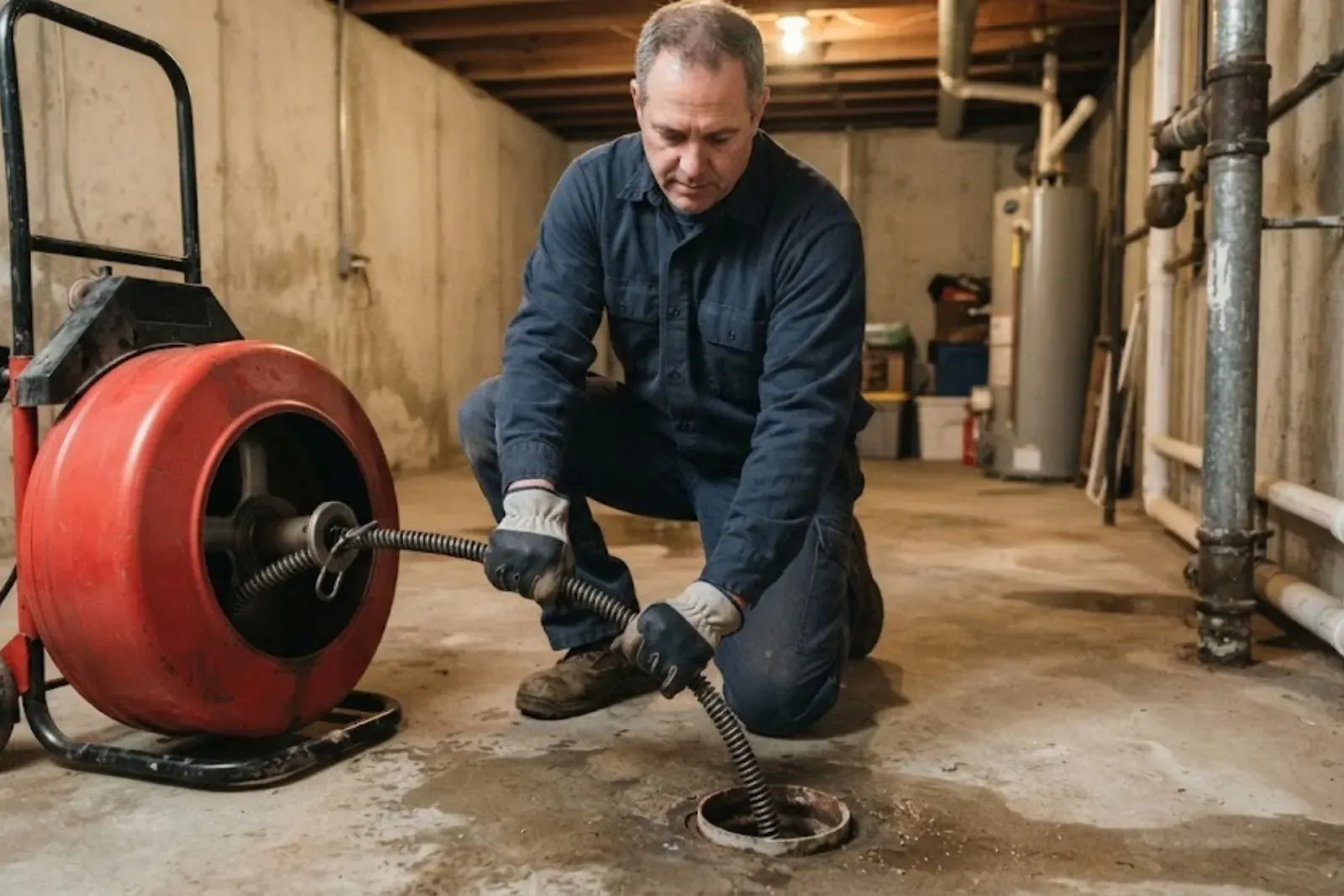
A drum machine feeds a steel cable with a cutting head into the cleanout or through the fixture. The head bores through grease and hair, or hooks and pulls the obstruction back.
- 04
Test and look
We run water again to confirm full flow. If the clog was deep or keeps returning, a camera head on a push cable shows the pipe wall and what keeps catching debris.
Kitchen sink clogs: grease, food scraps and the disposal
Kitchen drains clog differently from bathroom ones. Cooking grease cools inside the pipe, coats the wall, and then catches rice, coffee grounds and peels until the opening is the size of a pencil. A two inch kitchen line can look fine at the trap and be nearly shut a few feet into the wall.
A disposal that hums but leaves water standing is a different repair from a clogged line. If the unit itself is jammed or leaking, see garbage disposal repair. If water backs into the second sink bowl or the dishwasher hose, the clog is downstream and a cable run should clear it.
Shower and tub drains that stay slow
Hair and soap cause most of these. Hair wraps around the pop-up stopper linkage or the strainer crossbar, then gathers soap into a plug you can sometimes lift out in one piece. We pull the stopper first, because a hand tool often finishes the job.
A tub that drains fine alone but slows when the bathroom sink runs is describing the branch line, not the stopper. Fixing that means going past the tub trap, usually through the overflow plate or a nearby cleanout.
Grease, wipes and the town sewer in Morrisville
Morrisville's sewer service comes from the Town of Cary, and Cary runs a fats, oils and grease control program. Its curbside cooking oil collection is for Cary solid-waste customers only. Morrisville trash and recycling runs through GFL under the Town, so a Morrisville kitchen should use the alternative Cary lists: drop used oil at a Wake County Multi-Material Recycling Facility.
That ties straight back to your kitchen line. Let the pan cool, pour the oil into a lidded can, wipe the skillet with a paper towel before washing, and take the can to a county site when it fills. Managers of apartments and townhomes can ask Cary's pretreatment program about collection events.
Source: Town of Cary, fats, oils and grease at home. Town of Morrisville, new residents page.
A wet cabinet: clog or leaking drain line?
A drain that weeps is leaking, not clogged, and cabling it will not help. Run water for a minute, then feel under the sink. Drips at the slip nuts on the trap point to a loose or worn connection, while moisture on the wall pipe or the cabinet floor suggests a crack behind the wall.
A leak that appears only while the fixture is draining belongs to the drain side, not the supply side. Our leak detection visit separates the two, so you do not pay to replace the wrong pipe.
What not to pour, push or plunge
Common moves that make a clog worse
- Caustic or acid drain openers in a fully blocked pipe. The chemical sits there until a person has to work on it.
- A plunger on a double kitchen bowl without plugging the second side. The pressure just pushes through to the other basin.
- A wire hanger or garden hose pushed into a tub or toilet trap. It scratches porcelain and snags in the bend.
- Two cleaners mixed together. Some pairs release a toxic gas in a closed bathroom.
- Wipes sold as flushable. They do not break up like paper and gather at joints downstream.
When a cable is not the right tool
A cable opens a hole through a clog but does not scrub the pipe wall. If the same drain slows again within weeks, the line likely carries a coat of grease or scale that the cable punched through and left in place. That is the case for hydro jetting, which washes the full circumference.
If every fixture is slow, or the blockage sits in the pipe that runs to the street, read about sewer line cleaning next.
Safety checklist before you clear a drain yourself
Safety steps for a clogged drain
- Do not mix drain cleaners, and do not use a chemical cleaner after another one has failed.
- Do not plunge a drain that has standing chemical cleaner in it. Splashback burns skin and eyes.
- Wear gloves and eye protection for any snake or plunger work.
- Do not run a snake into a drain that is backing up with sewage. Stop and call.
- If several fixtures back up together, shut off water use and call a plumber.
Pipe repairs that follow a clog fall under the 2024 North Carolina Plumbing Code, based on the 2021 International Plumbing Code (IPC). Cary's guidelines on fats, oils and grease are the local rule of thumb for what never goes down a kitchen drain.
Call and tell dispatch which fixtures are affected so the right tool is on the truck.
What changes the price of drain cleaning
No one can responsibly quote a clog over the phone, so here is what moves the price once a plumber has seen the line.
Access point
A trap we can pull and a cleanout nearby make a simple job. A line reachable only through a roof vent or by lifting a toilet takes longer.
How far the clog sits
A clog at the trap is quick. One forty feet down a three or four inch line needs more cable, more time and a heavier machine.
What the clog is made of
Hair and soap clear differently from roots, grease or a dropped toy. Roots and scale may call for a different cutting head or for jetting.
Repeat clogs
A line that keeps closing usually needs a camera look to find the cause, which adds a step.
Fixture removal
Pulling and resetting a toilet to reach the line adds labor and a new wax ring.
Insurers usually treat a gradual clog as maintenance, so the clearing itself is rarely covered. Water damage from a sudden drain or sewer backup is paid only if your policy carries a backup endorsement, so check yours. You get a clear price before work starts.
Questions we hear
Yes. Dispatch answers every hour of every day, and the licensed plumber who calls back will ask which fixtures are backing up. Same-day appointments are offered when available, and for sewage coming up in the house we treat it as the top of the list.
We decide after we see the line. A cable is the first move for a single clog at a trap or branch. We move to jetting when the pipe is coated, the clog is roots, or the same drain has closed more than once.
Usually because the first clearing opened a hole without cleaning the wall. Grease, scale and roots rebuild the narrow spot quickly.
A camera run shows whether the cause is buildup, a sag where water sits, or a cracked joint letting roots in.
Count the fixtures. One slow fixture means a local clog. Several at once, or a gurgle in a toilet when you run the shower, means the shared main. Water in the lowest tub or a floor drain is the strongest sign.
Yes, with the right cable or a jet nozzle for the size of the pipe. Yard drains fill with dirt and roots, and a floor drain in a utility room often backs up from the main, so we check that first.
Often, yes. Most are held by screws, a lock ring or rust. Tell us the material and size when you call, and mention if the drain is overflowing right now.
We advise against them for a drain that is already full of water. The product has nowhere to go, it can damage old metal traps, and it makes the job less safe. A plunger on a single basin is the gentlest first try.