What your Morrisville tap water is like
What Cary reports about your water
The Town of Cary supplies water to Morrisville, treated at the Cary/Apex Water Treatment Facility from Jordan Lake. Cary's 2025 testing summary lists total hardness at 30 mg/L as calcium carbonate, with a range of 23 to 37, and about 2 grains per gallon, with a range of 1 to 2. Cary classes that as moderately soft.
Those figures come from the treatment plant, not from your tap. Water can change slightly on its way through the mains, so test your own tap if you want a firm number. Cary's Water System Laboratory answers report questions at (919) 362-5507.
Do you actually need a softener?
A softener removes calcium and magnesium, the minerals that make water hard, and swaps them for sodium or potassium. That is a useful trade in hard water. At about 2 grains per gallon, the problems a softener solves are mild, and the cost, the salt and the maintenance may not pay back.
We would rather tell you that now than sell you a tank you do not need. The table sorts the common reasons people ask.
| Reason | Does a softener help? | Better first step |
|---|---|---|
| White spots on glass and fixtures | A little, in the mildest cases | Wipe dry and use a rinse aid. Test the tap first |
| Scale inside a tankless heater | Slows it, but at 2 grains the effect is small | Flush on schedule. See the tankless page |
| Soap and laundry feel | Mildly | Adjust detergent amounts and compare before buying |
| Taste or smell of tap water | No. A softener does not change taste | A carbon filter is the right tool |
| Rusty or brown water | No | Find the source in the pipes or the water heater tank |
Filtration is a different job
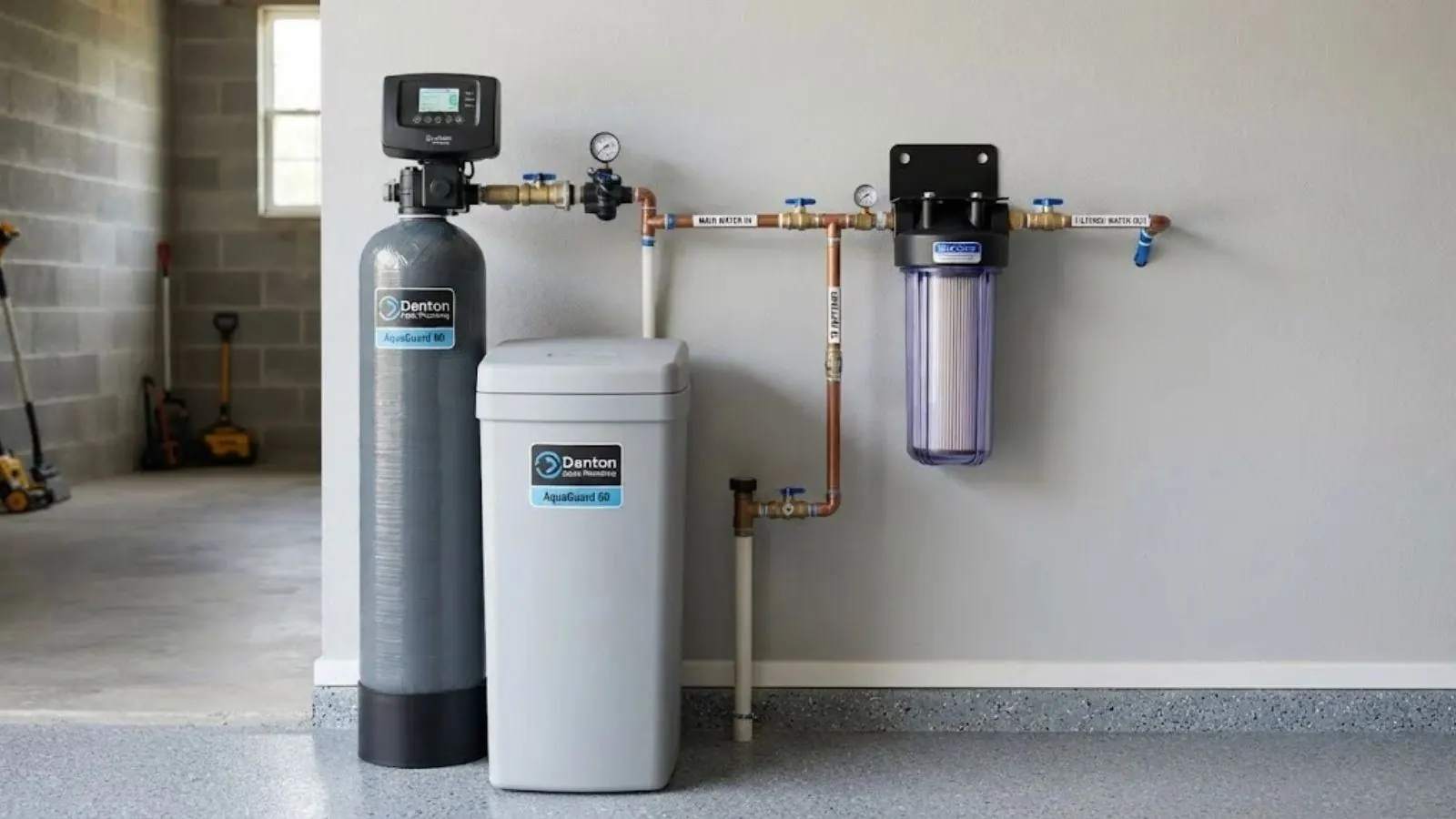
Filters and softeners get mixed up. A filter removes particles or tastes. A softener changes mineral content. A filter will not soften water and a softener will not clean it up.
Taste and odor are personal. If you want a change, carbon filters at the kitchen tap or at the main handle that. Sediment filters catch grit. Reverse osmosis units under the sink polish drinking water but waste some water and need a drain connection.
Filter types and what each does
- Sediment filter, which catches sand and rust flakes before the fixtures
- Carbon block or cartridge filter, which cuts taste and odor
- Under-sink reverse osmosis, which polishes drinking water at one tap
- Whole-house housing, which treats every tap but needs cartridge changes
What installation involves if you go ahead
A softener touches the main supply, the drain and a power outlet, so the plan matters.
- 01
Choose the spot
Near the main line entry, with a drain, a power outlet and room for a salt brine tank.
- 02
Plumb the bypass
Valves let the house run on untreated water during service, and a hard-water outdoor tap stays on the raw line.
- 03
Connect the drain
The regeneration cycle discharges brine, so the drain line needs an air gap to prevent backflow.
- 04
Set and test
The control head is programmed to your hardness, the tank is loaded with salt and a test regeneration is run.
Softeners need salt, a regular check on the brine tank and a drain connection that does not back up. If the drain line is poor, a drain cleaning visit may come before the softener does.
Water conditioner repair
If you already own a softener, the problems are common and fixable. A salt bridge, a hard crust in the brine tank, stops the brine from forming. A stuck valve or a worn injector leaves hard water after regeneration. A control head that has lost its programming can cycle at the wrong time.
We repair and service existing units, replace the resin bed when it is spent and check the drain line. We tell you plainly if a repair costs more than a new unit would.
What changes the price of a softener or filter
The range is wide because the choices are. You get a clear price before work starts.
Type of system
A single cartridge filter, an under-sink reverse osmosis unit and a whole-house softener sit in very different price ranges.
Capacity
A larger household or higher hardness needs a larger resin tank.
Installation conditions
A finished basement, a long pipe run or no nearby drain raises labor.
Bypass and plumbing changes
Old shutoffs or corroded fittings at the main line often need replacing.
Ongoing costs
Salt, cartridges and membranes are part of the long-term cost.
Insurance does not cover water treatment equipment, which is an upgrade and not a repair. Keep receipts for your records.
Standards worth knowing before you buy equipment
Treatment equipment is plumbed in under the 2024 North Carolina Plumbing Code, based on the 2021 International Plumbing Code (IPC). Cary's published water report is the reference for hardness, so compare any salesperson's numbers to it.
Ask for the lab report and the equipment's rated capacity in writing. A seller who will not give them is a warning sign.
Call and we will talk through your tap water and your goals before recommending anything.
Salt, drains and the rest of your plumbing
A softener does not fix a water heater with a rumbling tank or a pipe that leaks. If your concern is hot water, the water heater repair page and the plumbing installation page are better starting points.
Brine discharge adds to your drain load, so a slow drain deserves attention before any new equipment. Cary also asks customers to follow the year-round conservation guidance, and a softener that regenerates on a timer uses water, so match its settings to your household.
Questions we hear
Cary supplies the water. Its 2025 testing summary lists hardness at about 30 mg/L as calcium carbonate, around 2 grains per gallon, classed moderately soft. Your tap may differ slightly, so test it.
No. A softener targets calcium and magnesium. A carbon filter is the tool for taste and odor.
At about 2 grains per gallon the benefit is small. A regular flush covers most homes. Check your manual and the interval it lists.
Yes. We handle salt bridges, stuck valves, injectors, resin replacement and drain problems. We tell you if a repair is not worth the cost.
Home hardness test strips give a rough number, and a lab test gives a firm one. Cary's Water System Laboratory can answer questions about its published report at (919) 362-5507.
It is a preference. It improves taste and filters finely, but it wastes some water and needs maintenance. Try a carbon filter first.