Which kind of installation are you planning
| Project | What we install | Usually needs |
|---|---|---|
| Fixture swap | Toilet, faucet, sink, shower valve, hose bib | Often a same-day visit, a permit may not be required for minor work |
| Bathroom or kitchen remodel | New supply, drain and vent lines, valves, fixtures | A plan, rough-in inspection and finish-out visit |
| Basement or garage bath | Drain, vent and supply to a new location | Ask about a permit, and take a hard look at drain slope |
| New appliance hookup | Dishwasher, ice maker, washer box, water heater | Shutoff valves, proper drains and venting |
| Addition or ADU | Full rough-in with main connections | Permit and any plan review the town requires |
| Outdoor lines | Hose bibs, irrigation connection, utility sinks | Backflow protection where required |
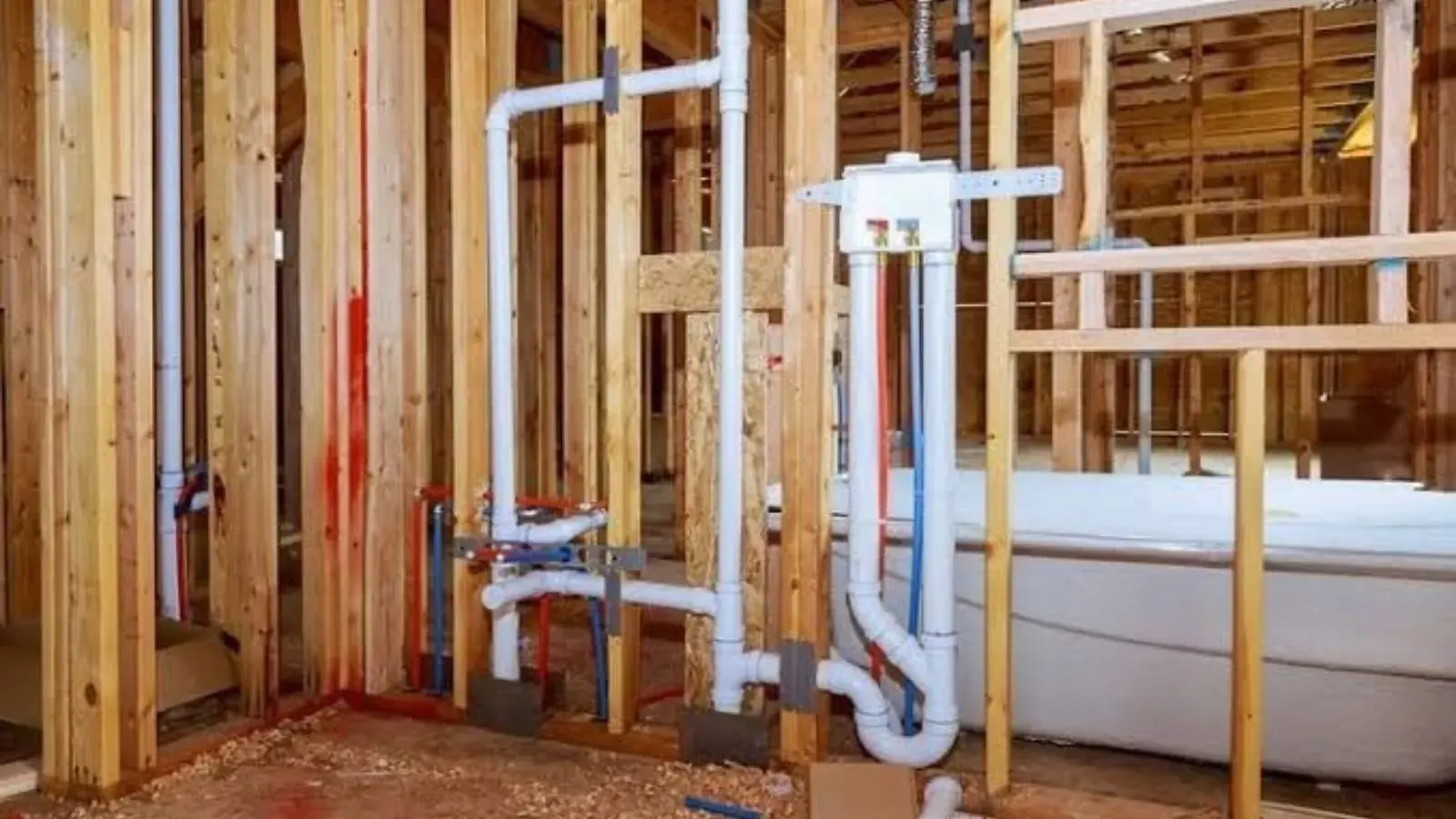
Fixture swaps and remodel rough-in are different jobs. A swap works with the pipes already in the wall. Rough-in means we choose pipe sizes, run new lines to new locations and leave stub-outs ready for the finish trades. The decisions at that stage are hard to change later.
Supply lines: PEX, copper and what we recommend
Most new residential supply work today uses PEX, a flexible cross-linked polyethylene tube joined with crimp rings, expansion fittings or push connections. It resists freeze damage better than rigid pipe, bends around corners and takes fewer joints. Copper remains a good choice for exposed runs and some repair tie-ins, and it is what many homes already have.
We match what you have. Mixing PEX and copper is routine with the right transition fittings, and a long manifold system suits large remodels with many fixtures. We explain the layout before cutting so you can choose between a trunk-and-branch and a home-run design.
Plastic and metal do not mix by accident
Connecting two different metals without a dielectric union or the right transition fitting can corrode the joint over time. That is why we plan the transitions on paper first and not at the wall.
Drains, vents and slope
Every fixture drain needs a vent, or the trap loses its seal and sewer gas enters the room. Drain lines must also fall at a steady slope, and a flat or backward run will clog no matter how good the fixture is. These rules come from the plumbing code, and they are the part of a remodel that inspectors look at closely.
In a basement or slab-on-grade room, a new drain may need to tie into a line beneath the floor. We locate the existing drain first, and a camera can help, and sewer inspection explains how we scope a line. If gravity will not work, an ejector pit and pump is the fallback.
Permits and inspections in Morrisville
What the Town of Morrisville says about plumbing permits
The Town of Morrisville Inspections Department says a plumbing permit is required for the installation, extension, relocation or replacement of a plumbing system, while minor fixture repairs that do not disturb water, waste or vent piping may be exempt. The department takes calls at 919-463-6190.
North Carolina's plumbing code is the 2024 edition, built on the 2021 International Plumbing Code with state amendments and mandatory since July 1, 2025. We cannot tell you whether your specific job needs a permit from memory, so call the department with a description of the work before you start. A small part of Morrisville extends into Durham County, and which office inspects that area is something to confirm by phone.
Source: Town of Morrisville, residential inspections
Check any plumber's license before hiring. The State Board of Examiners of Plumbing, Heating and Fire Sprinkler Contractors runs a public search at public.nclicensing.org, where you can look up a contractor. That applies to us as much as to anyone else.
Before anyone digs
Outdoor installs, such as a new hose bib supply, a water line to a garage or a sewer tie-in, often involve digging. North Carolina 811 asks you to call 811 or 1-800-632-4949 at least three working days before you dig, and locating of public underground lines is free. Do it before the trench, not during it.
Private lines, like the one running from your meter to the house, are not marked by the utility, so we ask where they run and confirm with a locator when needed. Our water line repair page covers the pipe that runs from the meter to the house.
Which code your new plumbing has to meet
New fixtures and supply lines in North Carolina are installed to the 2024 North Carolina Plumbing Code, which became mandatory on July 1, 2025 and builds on the 2021 International Plumbing Code (IPC). The plumber on site decides which section applies, so we do not quote section numbers from a web page.
What you can do is ask who pulls the permit before the first pipe is cut. The Town of Morrisville Inspections Department at 919-463-6190 can tell you whether your remodel needs one.
Call to schedule a visit and talk through the layout before the walls are closed.
How a remodel plumbing job is sequenced
Rough-in and finish are separate visits, with inspection in between where required.
- 01
Plan and permit
We measure the room, choose pipe sizes and fixture locations, and confirm what the town requires.
- 02
Rough-in
We run drain, vent and supply lines through framing and set the valve bodies, and we pressure test the supply before it is covered.
- 03
Inspection
The inspector reviews the open work where a permit applies. We fix anything flagged before drywall.
- 04
Finish-out
After tile and cabinets, we set the fixtures, connect the stops and supply lines, and test every drain and valve.
Water heaters, gas and specialty installs
New water heaters and gas appliances have their own pages. See water heater installation for tank, heat pump and tankless work. For gas line work, we always ask you to leave the building and call the gas utility or 911 first if you smell gas.
If your remodel includes a water softener or filtration, tell us up front so we can leave room for the bypass valves and a drain connection.
What changes the price of plumbing installation
Installation prices vary a lot because the jobs do. These are the main drivers.
Scope
Swapping one faucet and rough-in for a full bathroom are very different amounts of labor.
Pipe material and routing
Distance, number of fittings and the path through framing all affect time.
Access
Open walls and basements are quick. Finished ceilings and slab floors are not.
Fixtures and valves
The fixtures you choose, and any specialty valves, are often the largest line.
Permits and inspections
Fees and the extra visits that inspections need.
Insurance does not usually pay for new installations or upgrades. It may cover repairs after a sudden loss.
Questions we hear
Fixtures, supply lines, drains and vents, appliance hookups, shutoff valves and rough-in for remodels and additions. Gas and water heater work have their own pages.
The Town of Morrisville Inspections Department says installation, extension, relocation and replacement of plumbing needs a permit, while minor fixture repairs may not. Call 919-463-6190 to confirm your case.
Both work. PEX is faster to install, resists freeze damage and costs less in most cases. Copper is better for exposed runs and some tie-ins. We pick based on the job.
Usually yes, but drain slope and venting limit where it can go. We check the slope and the vent route before agreeing to the layout.
Yes. Send us the model number before the visit so we can check parts and the rough-in. We cannot warranty a fixture we did not supply.
Use the State Board of Examiners of Plumbing, Heating and Fire Sprinkler Contractors public search at public.nclicensing.org.