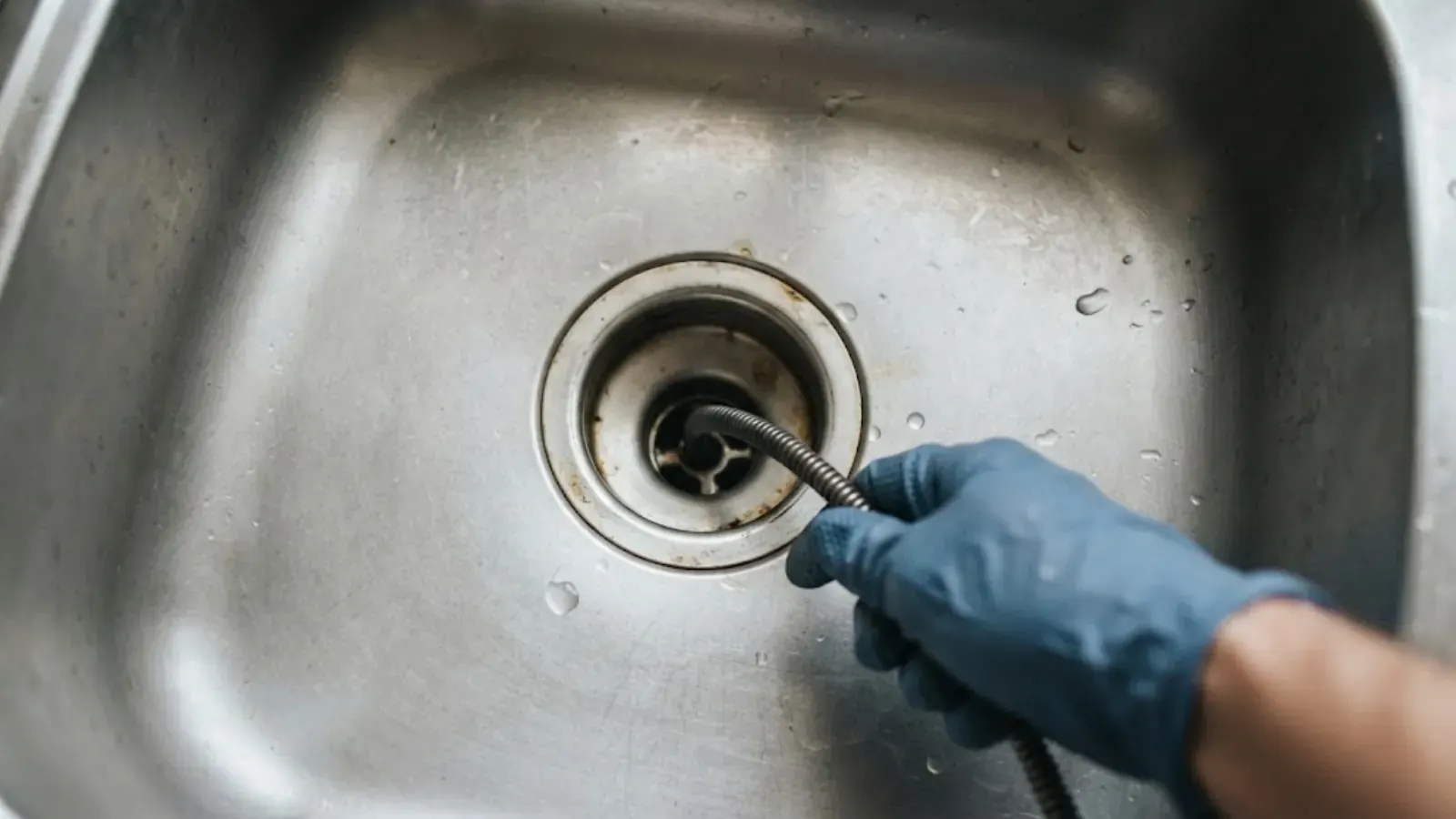
What natural drain methods can and cannot do
Most household clogs are a mix of hair, soap film and food grease that has cooled and stuck to the pipe wall. A gentle method can loosen a thin layer of that material. It has little effect on a plug that has packed together or on a blockage deeper in the system.
Think of these methods as maintenance and first aid. If a fixture drains slowly but still drains, try the options below. If water will not move at all, or more than one fixture is affected, skip ahead to the section on calling a plumber.
| Method | Works best on | Limits and cautions |
|---|---|---|
| Plunger | Sink and tub clogs close to the drain opening | Needs a good seal, and stop if water backs up in a second fixture |
| Hot tap water flush | Soap film and light grease in a kitchen sink | Does not reach hair or solid plugs |
| Boiling water | Metal pipes with a light grease film | Can soften plastic pipe joints and crack porcelain, so avoid it on toilets and PVC runs |
| Baking soda and vinegar | Mild odor and thin film | The fizz is gentle and rarely moves a real clog |
| Hand drain snake | Hair near the trap | Can scratch fixtures and cannot reach deep blockages |
Start with a plunger and a hair catcher
A cup plunger on a sink or a flange plunger on a toilet is the first tool to reach for. Fill the sink with a few inches of water so the cup is submerged, seal it over the drain and push and pull steadily for about 20 seconds. Block any overflow opening with a wet rag so pressure goes down the pipe.
A mesh hair catcher in the tub or shower prevents the most common clog in the first place. Empty it weekly. In the kitchen, a sink strainer keeps food scraps from entering the trap.
Baking soda and vinegar: realistic expectations
Pour about half a cup of baking soda down the drain, follow with an equal amount of vinegar and cover the opening for several minutes. The reaction foams and can loosen a thin film and freshen the pipe. Then flush with hot tap water.
It is a cleaning habit, not a drain opener. If the sink is still slow after two tries, the clog is thicker or further down than the foam can reach. Do not escalate by adding chemical cleaners on top of vinegar, because mixing products can release harmful fumes.
Boiling water: use with care
Boiling water can melt a grease film in a metal kitchen drain, and it costs nothing. It can also soften the glue joints and the pipe wall in plastic drain lines and crack a porcelain bowl or tub. Hot tap water is a safer first choice.
If you use boiling water, pour slowly, keep the stream aimed at the drain and never pour it into a toilet or into a drain that is already full of standing water.
Things to avoid doing
- Mixing different drain cleaning products, which can release toxic fumes.
- Pushing a plunger when a chemical cleaner is sitting in the drain, since it can splash back.
- Forcing a rigid snake hard against a bend, which can scratch or puncture the pipe.
- Pouring cooking grease down the sink to flush it away with hot water.
Stop the clogs before they start
Grease is the big one in kitchens. It runs down hot and hardens in the pipe as it cools, building a layer that traps everything else. Wipe pans with a paper towel before washing and keep used cooking oil out of the drain.
Morrisville homes do not have Cary's curbside cooking oil collection, which is for Cary solid waste customers. Instead, used cooking oil can be taken to a Wake County Multi-Material Recycling Facility, according to Cary's guidance.
Whose job is the sewer line? A Morrisville answer
Who clears a sewer blockage in Morrisville
Cary's utility serves Morrisville sewer customers. Cary says it clears blockages in the main sewer and in the lateral up to the cleanout, a capped vertical pipe at the edge of your property. You are responsible for the lateral between the cleanout and your house, or for the whole lateral if there is no cleanout at the edge.
Cary's published numbers for sewer blockages are 311 or (919) 469-4090 on weekdays from 7 a.m. to 7 p.m., and (919) 469-4012 after hours and on holidays. If several fixtures back up at once, the blockage may be in the main or the lateral. Locate the cleanout and call before you spend time on home remedies.
Source: Town of Cary fats, oils and grease guidance.
Signs it is time to call a plumber
| What you notice | What it usually means | Next step |
|---|---|---|
| Two or more fixtures drain slowly together | Branch line or main line blockage | Stop using water, call for sewer line cleaning |
| Water gurgles or backs up in a tub when the toilet flushes | Main line restriction | Check the cleanout and call a plumber |
| The same drain clogs again within weeks | Grease buildup or roots further down | Camera inspection and possibly hydro jetting |
| Sewage smell or wet spot in the yard | Lateral damage or overflow | Call right away |
A plumber uses a motorized cable machine for plugs and a camera on a push cable to see the pipe. Our drain cleaning service starts with finding the cause, not just pushing the clog along.
Call (919) 944-7281 for a licensed plumber to clear it and show you what caused it.
If sewage is coming up into a tub or floor drain, keep people and pets out of the area and call. Our dispatch line works 24/7, and our Durham customers can use the same number.
Questions about this topic
They can freshen a drain and loosen a thin film, but they rarely clear a real clog. Hair and compacted grease need a plunger, a snake or a plumber.
It is fine for some metal pipes with a light grease film, but it can damage plastic joints and crack porcelain. Hot tap water is the safer choice.
According to Cary, Morrisville homes can drop off used cooking oil at a Wake County Multi-Material Recycling Facility. Cary's curbside oil collection is for its own solid waste customers.
Cary's utility clears the main and the lateral up to the cleanout, and you own the rest. Call 311 or (919) 469-4090 on weekdays or (919) 469-4012 after hours, then call a plumber if the problem is on your side of the cleanout.
They work slowly on organic film, and they suit regular maintenance more than active clogs. They do not clear hair or solid plugs.
Wipe grease out of pans before washing, use a sink strainer and run hot tap water after dishes. If clogs keep returning, have a plumber inspect the line.