Start with what your house is built on
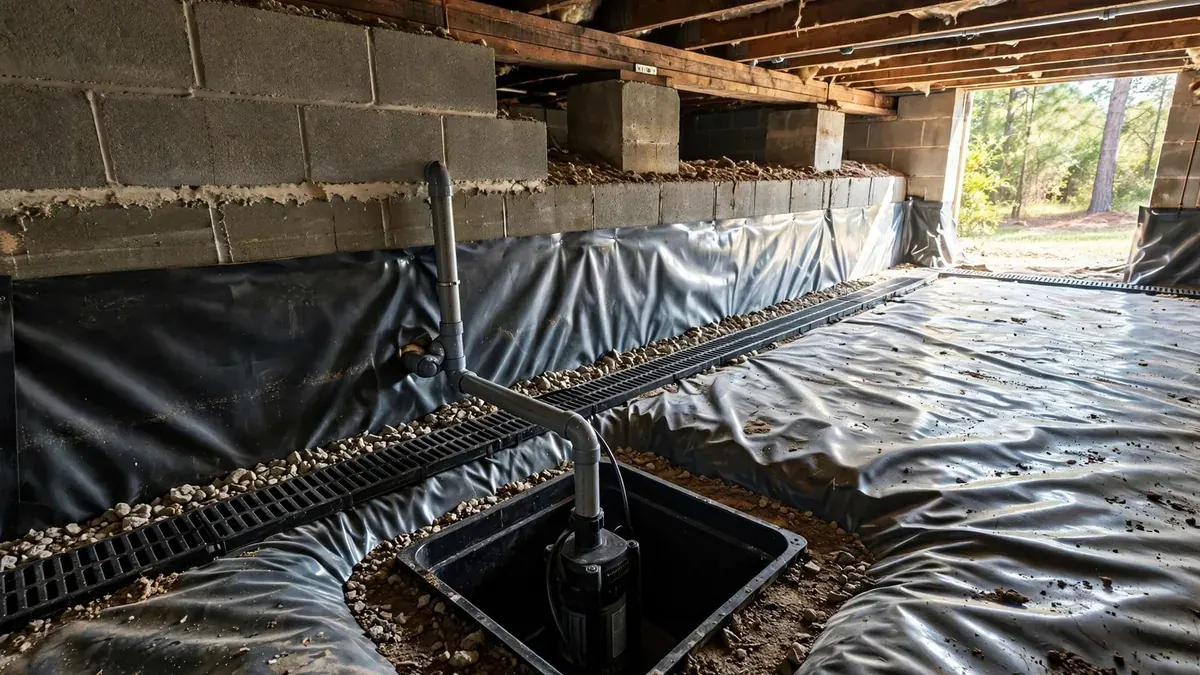
Homes sit on a basement, a crawlspace, or a concrete slab. Morrisville has no verified single answer, and each house is different, so look at yours. A basement has walls and a floor below grade. A crawlspace has a short foundation wall and a dirt or concrete floor. A slab has no space underneath at all.
That matters because the same crack means different things in each. A wet crack in a below-grade wall is a waterproofing question. A crack in a slab floor is often a shrinkage or settlement question, and a wet slab can point to a leaking pipe underneath.
| Crack | What it often means | Next step |
|---|---|---|
| Hairline, vertical, dry | Concrete shrinkage as it cured | Mark it with a pencil and date. Watch it. |
| Vertical and wet after rain | Water is finding a path through the wall | Seal from inside or outside, fix drainage |
| Horizontal across a wall | Soil pressure pushing the wall inward | Have a structural professional look. Do not just seal it. |
| Stair-step in block or brick | Differential settlement of the footing | Structural evaluation, monitor for movement |
| Wide at one end, narrow at the other | One side of the foundation is moving | Structural evaluation |
| Slab crack with damp or warm spot | Possible leak under the slab | Ask about slab leak repair and testing |
Wall cracks versus floor cracks
Foundation wall cracks tend to follow stress. Soil pressure, settling and freeze-thaw cycles push on a wall until its weakest line gives. Slab cracks tend to follow shrinkage, loose fill underneath, or water.
Neither is automatically a disaster. What separates a cosmetic crack from a structural one is movement and width, and whether it leaks. A crack gauge or a ruler photographed monthly gives you evidence in place of worry.
Morrisville note: soil movement is a real statewide factor
The North Carolina Geological Survey says expansive, shrink-swell soils occur in the state, with elevated occurrence in the Triassic basins and the Carolina terrane, and that a small amount of soil expansion can cause foundation damage. The survey page does not name Wake County, Durham County or Morrisville, so it cannot say your lot has these soils.
The tie-back is practical. If you see stair-step cracking, doors that start to stick, or a gap opening between a wall and a floor, ask a structural professional about your soil before paying for a sealing job that treats only the symptom.
Source: NC Department of Environmental Quality, expansive soils (shrink-swell clays).
Repair options for a leaking crack
Crack repair falls into three groups. Injection pushes epoxy or polyurethane into the crack from inside, and is often used for a clean vertical crack that leaks. Surface patching with hydraulic cement works on small, dry cosmetic cracks. Exterior excavation exposes the wall, seals it, and installs drainage, which is the most disruptive option.
Each one stops a symptom. None of them fix the reason water was pressing on the wall, which is why drainage matters as much as the crack itself.
| Method | Best for | Limit |
|---|---|---|
| Epoxy injection | Stable, clean cracks that need structural bonding | Will not hold if the wall keeps moving |
| Polyurethane injection | Leaking cracks that need a flexible seal | Not a structural repair |
| Hydraulic cement patch | Small cosmetic cracks | Not for wet or moving cracks |
| Exterior seal and drain | Walls with persistent water pressure | Excavation, landscaping and cost impact |
| Interior drain and sump | Water entering at the floor edge | Manages water, does not seal the wall |
A sump pit and pump collect water from an interior drain and send it out of the house. If you already have one, a sump pump check belongs on your list, because a failed pump during a storm makes any crack repair irrelevant.
Fix the water before you fix the crack
Drainage checks you can do yourself
- Walk the outside of the house during rain and watch where roof water lands.
- Make sure downspouts discharge several feet away from the foundation.
- Check that soil slopes away from the wall and has not settled into a bowl.
- Look for bare dirt or mulch piled against siding, which holds moisture.
- Clean gutters so overflow does not pour down the wall.
The Wake County hazard plan records flood events in Morrisville, so heavy rain is not hypothetical here. Annual rainfall at RDU is about 46 inches by a sum of the National Weather Service daily normals, which is plenty to find a weak spot.
When water is not from the crack at all
Damp near a foundation can be a plumbing leak. Check the water meter with every tap off. If the indicator is turning, a pipe may be leaking inside a wall or under a slab, and leak detection is the better call. Waterproofing a wall that is wet from a supply line does nothing.
Condensation is another common false alarm. Cold walls in a humid season sweat, and the water looks like a leak but dries when humidity drops. Tape a square of plastic wrap to the wall for a day. Moisture under the wrap means it comes through the wall, and moisture on the room side means condensation.
Guidelines for judging a crack
Hairline cracks are common. Cracks that widen, step or leak call for a structural engineer, and the guidelines on this are the engineer's, not a plumber's. Plumbing work that follows, such as a drain or sump, falls under the 2024 North Carolina Plumbing Code, based on the 2021 International Plumbing Code (IPC).
Photograph and date any crack so you can see change over time.
Call (919) 944-7281 and describe what you see. Plumbing causes can be checked right away, and structural movement needs a structural professional.
What we do and do not do
We handle plumbing-side causes: sump pumps, drains, leaks and water lines. We do not engineer foundation repair, and we will say so if the crack looks structural. Our basement waterproofing page explains the drainage and pump side in more depth.
Households in south Durham can see the Durham page for how dispatch works from our Morrisville base.
Questions about this topic
No. Hairline vertical cracks from concrete curing are common and often cosmetic. Horizontal cracks, stair-step cracks, and cracks that widen over time deserve a professional evaluation.
Mark both ends with a pencil and date, then photograph a ruler beside it each month. A crack gauge from a hardware store does the same job. Movement over a few months is the signal to call.
A dry hairline can be patched with a masonry product. A leaking or moving crack is a different job, since the wrong sealant traps water in the wall or cracks again.
We have no verified count of which foundation types are common in town, and houses differ. Check whether yours has a basement, a crawlspace or a slab, and tell any contractor which one it is before they quote.
The state geological survey says expansive soils occur in North Carolina, especially in the Triassic basins and Carolina terrane. It does not name Morrisville, so ask a structural professional about your lot.
No. A dry crack may only need monitoring. Waterproofing is for water entering through a crack or wall, and the first fix is usually drainage: gutters, downspouts and grading.