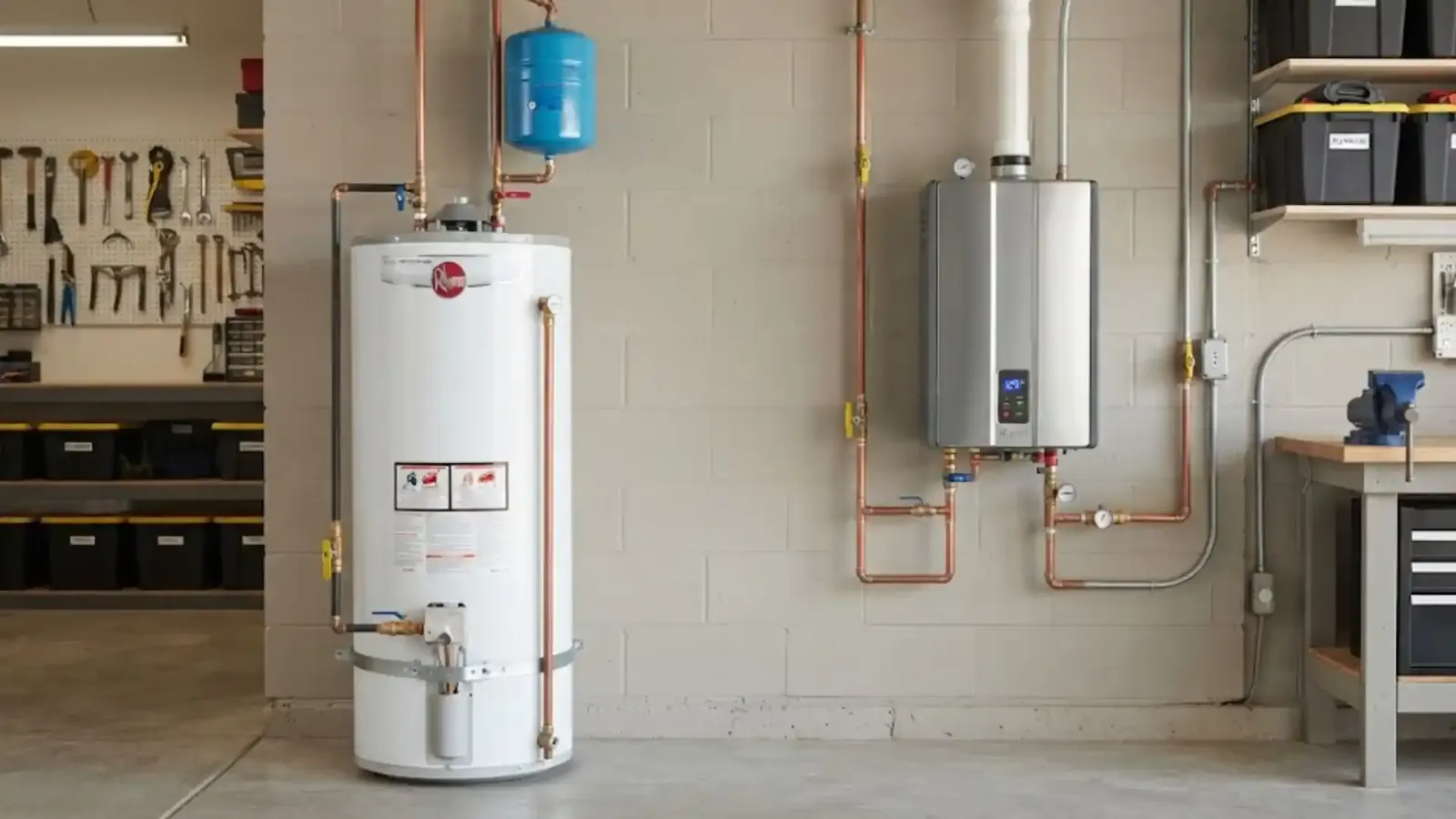
Why heated water needs somewhere to go
Water expands as it warms. In an open system the extra volume pushes back into the street supply and nobody notices. A check valve, pressure reducing valve with a built-in check or a backflow preventer blocks that path, so the water has nowhere to go but into your pipes.
That is when pressure climbs each time the burner or element runs. A small tank with a rubber diaphragm and a cushion of air takes up the extra volume.
Signs your system needs one
Look for these
- The temperature and pressure relief valve drips or spits after a heating cycle.
- Pipes knock or bang when the heater fires.
- Faucets or toilet fill valves wear out faster than expected.
- A pressure gauge on a hose bib reads above about 80 psi after the heater has run.
- There is a one-way device on the water line but no expansion tank above the heater.
A relief valve that drips is the heater telling you pressure is too high. Do not cap it or plug it. The valve is there for safety, and a plumber should find the cause.
| Your setup | Likely answer | What to do |
|---|---|---|
| Check valve or backflow device at the meter or main | Closed system, tank likely needed | Have a plumber measure pressure and size a tank |
| PRV with built-in check valve | Closed system | Same as above |
| No one-way device, supply is open | Often not needed | Confirm with a pressure test |
| Relief valve drips after heating | Pressure problem | Test pressure before replacing the valve |
| Tank already present but heater still knocks | Tank may be waterlogged | Check the air charge, replace if it holds water |
Sizing and the air charge
Tanks are sized to the heater volume and the supply pressure. A common residential tank holds a couple of gallons, and a bigger heater or higher pressure calls for a bigger tank. The data plate on the tank lists the size and the factory charge.
The air charge must match your house pressure, tested with a tire gauge on the tank's valve with the water side shut and relieved. A tank pre-charged at the factory to a different pressure than yours will not work well until it is adjusted.
Morrisville permits for water heater work
The Town of Morrisville Inspections Department says a permit is generally not needed to replace a water heater in a one- or two-family home. The conditions are that the energy input is no greater than the original, nothing changes in fuel, location, or venting and piping size, and a licensed plumbing contractor does the work.
Adding an expansion tank is a change to the water piping near the heater, so ask the department at 919-463-6190 whether it falls inside that rule for your address. The 2024 North Carolina Plumbing Code is the edition in force since July 1, 2025.
Source: Town of Morrisville Residential Inspections page and NC Office of State Fire Marshal code effective date, checked October 2026.
How the tank is installed
- 01
Shut off and relieve
We close the cold supply, open a hot tap and relieve pressure so the line is dry where we cut.
- 02
Find the cold line
The tank goes on the cold supply to the heater, ahead of the shutoff on the tank side, usually through a tee.
- 03
Support and orient
A tank mounted on a short nipple needs a strap or bracket when it is heavy, and many sit best upright or with the manufacturer-allowed orientation.
- 04
Set the charge and test
We match the air charge to line pressure, restore water, and check every joint for weeping.
Done as part of a new heater, it fits into a standard water heater installation visit. Done on an older heater that keeps releasing water through the relief valve, it belongs with water heater repair.
Mistakes we see
Avoid these
- Installing the tank on the hot side or after a shutoff valve, which isolates it.
- Skipping the air charge check and trusting the factory number.
- Plugging the relief valve to stop a drip.
- Using the tank to hide a pressure problem that really needs a pressure reducing valve.
- Hanging a heavy tank from soldered copper without a support.
How long a tank lasts and how to test it
A diaphragm tank can fail when the rubber ruptures or the air charge leaks out. A quick test is to tap the tank. It should sound hollow on top and solid on the bottom. A tank that sounds solid all over is waterlogged.
Press the air valve with a small tool. If water comes out instead of air, the diaphragm has failed and the tank needs to be replaced, not recharged.
Pressure reducing valves and the bigger picture
An expansion tank manages the pressure spike caused by heating. It does not fix high street pressure. If the gauge shows high pressure even before the heater fires, a pressure reducing valve is the right part, and both can be present in the same house.
Check the gauge at night or early morning when neighbors use little water, because static pressure is highest then. A reading that stays high points to the supply side and not to the heater.
Homes served from Durham
We dispatch to Durham addresses as well. Permit and utility contacts differ from those listed here, so see our Durham page for how we handle those calls. A leaking relief valve is a reason to call even if you are unsure of the jurisdiction.
When to call us
If the relief valve is running steadily, the tank is hot and the discharge pipe is spitting water, shut off the heater power or gas and the cold supply, then call. A steadily flowing relief valve can mean the heater is overheating, and that is not a wait-until-Monday problem.
For an older heater that has started to leak at the tank body, a water heater replacement is the honest answer rather than a repair.
Call (919) 944-7281 and we will check pressure and the tank before anyone replaces the valve.
Questions about this topic
No. They matter in a closed system where a check valve or backflow device blocks thermal expansion from returning to the supply. A pressure test tells you.
Often because thermal expansion pushed pressure past the valve setting. The cause could also be a failing valve, so test pressure first.
Tap it and listen, then press the air valve. Water from the valve means the diaphragm failed and the tank must be replaced.
A confident DIYer can, but the cold-side placement, support and air charge must be right. A licensed plumber is also the safe route for permit questions.
The Town's water heater permit exemption covers like-for-like swaps. Ask the Inspections Department at 919-463-6190 about the tank.
Most fixtures are designed for pressure well under 80 psi at the tap. If your gauge reads higher, a pressure reducing valve may be needed too.