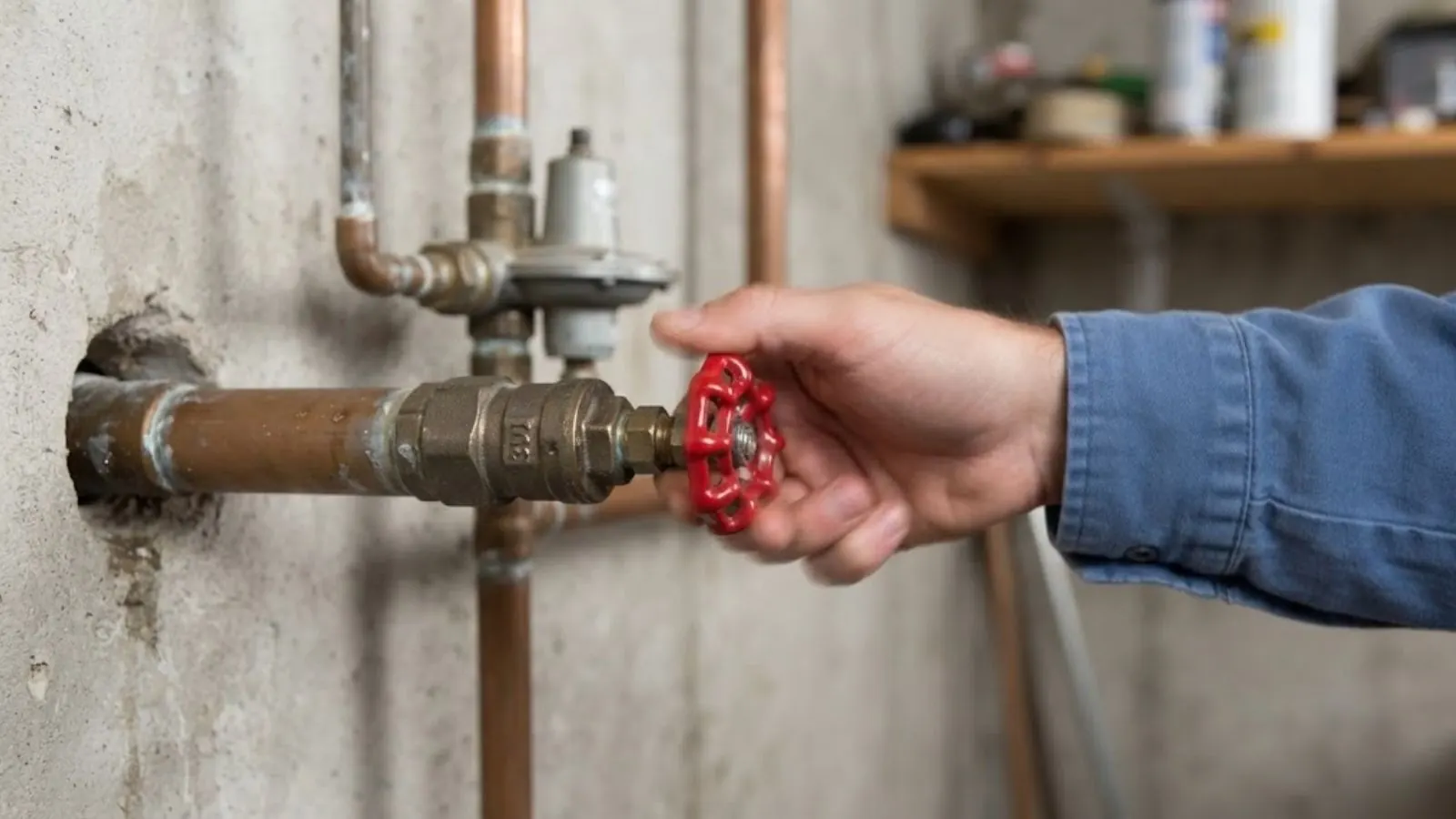
Find the shutoffs before you need them
Every house has a main water shutoff, and every fixture should have its own stop valve. Walk through the house once and locate each one. Turn it a quarter turn to confirm it moves, then turn it back.
A valve that is frozen with mineral scale is a problem you want to discover on a calm Saturday, not while water is spraying. If a valve will not move or weeps at the stem, that is a repair worth scheduling.
Morrisville note: a meter test that costs nothing
Cary supplies water to Morrisville, and Cary's own conservation page gives a simple leak check. Lift the meter lid, watch the indicator with every tap off, and if it keeps turning, you may have a leak. A toilet dye test with food coloring and a walk around the yard for wet patches are the other two steps it lists.
Do this check once a quarter, and again if a bill looks high. If the indicator moves with everything off, that points to a hidden leak and the next call is to a plumber who does leak detection.
Source: Town of Cary, high water consumption tips.
Monthly, seasonal and yearly jobs
| How often | Task | What you are looking for |
|---|---|---|
| Monthly | Run every tap and flush every toilet, including guest rooms | Slow drains, weak flow, a toilet that keeps running |
| Monthly | Look under sinks with a flashlight | Damp cabinet floors, green corrosion on fittings, drips from supply lines |
| Quarterly | Water meter test | Indicator turning with all water off |
| Twice a year | Check hose bibs and washing machine hoses | Bulges, cracks, weeping at the fittings |
| Yearly | Flush a few gallons from the water heater drain | Sediment, rusty water, a leaking drain valve |
| Yearly | Test the water heater relief valve | Water that flows and then stops when the lever is released |
None of this needs special tools beyond a flashlight, a bucket and a garden hose. Write the date you did each job on a sticky note inside a cabinet door. After one year you will have your own baseline for what normal looks like.
Water heater care that prevents the worst surprise
A tank heater is the one appliance in most houses that holds dozens of gallons above your floor. Sediment collects on the bottom of the tank, insulates the water from the burner or element, and can leave a rumbling sound when the unit runs.
Draining a few gallons through the bottom valve each year carries some of that sediment out. Check the area around the tank base too. A damp ring or rust streaks on the pan mean water is escaping, and a water heater repair visit is cheaper than a flooded utility room.
When flushing is not enough
If the tank drips from the body rather than a fitting, no flush will help. A tank that has leaked from the shell is finished, and the conversation shifts to water heater replacement. Turn off the cold supply and the power or gas, then call.
Drain habits that avoid most clogs
Daily habits that keep drains clear
- Put a hair catcher in every shower and tub drain, and empty it weekly.
- Wipe grease from pans into the trash before washing them.
- Flush only toilet paper and human waste. Wipes sold as flushable still tangle in sewer pipes.
- Run the disposal with cold water and feed it small amounts at a time.
- Pour a kettle of hot tap water down a slow kitchen drain once a week.
When a drain is slow in more than one fixture, the blockage is usually past the branch, in a shared line. That is the point where a hand tool stops helping and professional drain cleaning with a cable or jetting head makes sense.
Toilets, supply lines and the small parts that fail first
Most leaks in a house start at a cheap part. A braided supply hose under a sink or behind a toilet has a service life, and the metal braid can hide a failing rubber core. Replace any hose that is kinked, bulging or stained at the nut.
In the toilet tank, a flapper that no longer seals lets water trickle into the bowl all day. Drop a few drops of food coloring in the tank, wait fifteen minutes without flushing, and look at the bowl. Color in the bowl means the flapper or fill valve needs attention, and the fix is usually a small part.
Also check the washing machine hoses, which sit under pressure all day behind the machine. A hose that bursts while no one is home can empty a lot of water onto the floor before anyone notices. Many owners swap rubber hoses for braided ones and shut the valves when leaving for a long trip.
Cold weather and exposed pipes
Pipes in unheated spaces, such as a garage wall, a crawlspace or an outdoor spigot line, are the ones that freeze first. Check your own home to see what is exposed, since foundation and layout differ from house to house.
Disconnect garden hoses before the first hard freeze, close the interior valve feeding an outdoor spigot if there is one, and let a faucet drip in extreme cold. Open cabinet doors on exterior walls so room air reaches the pipes.
Signs it is time to call a plumber
Do not wait on these
- A water bill that jumps with no change in how many people live in the house.
- Brown or rust-colored water that does not clear after running the tap.
- A musty smell or soft spot on a wall, ceiling or floor.
- Water pressure that has dropped at every fixture.
- A gurgling toilet when the washing machine drains.
Standards behind the maintenance schedule
The maintenance steps here follow manufacturer guidance and general plumbing practice, not a local rule. Repairs they uncover fall under the 2024 North Carolina Plumbing Code, based on the 2021 International Plumbing Code (IPC).
Use Cary's meter check, described above, once a season.
Call (919) 944-7281 and describe what you see. A licensed plumber can tell you what can wait and what cannot.
Where to turn for help in Durham
If you live across the county line, the Durham page explains how our Morrisville base reaches south Durham.
Questions about this topic
A visual check by you each month plus a professional look when something changes is enough for most homes. Schedule an inspection before buying a house, after a major leak, or when a camera or pressure test is needed to settle a question.
Turn every fixture off, lift the meter lid, and watch the indicator. If it keeps turning with no water in use, you may have a leak. Cary, which supplies Morrisville water, publishes this same check on its high water consumption page.
Yearly is a common habit and does no harm on a healthy tank. Open the drain valve slowly into a hose, run a few gallons until the water clears, and stop if the valve will not close again or the flow does not slow.
Grease, coffee grounds, eggshells, pasta and rice, and fibrous scraps like celery all cause trouble. Fat cools and hardens inside the pipe, which is why wiping pans before washing is a better habit than flushing with hot water.
Turn off the main shutoff, open one low faucet to relieve pressure, and set the water heater to vacation or pilot mode. A hose burst or supply-line failure while you are gone is the loss that costs most.
Ask the Town of Morrisville Inspections Department at 919-463-6190 about permits before replacing a fixture line or heater. Routine upkeep like replacing a washer or a supply hose normally does not need one, but the department can confirm.